Showing posts with label foreclosure. Show all posts

Thursday, September 15, 2011

foreclosure


You've no doubt seen them or study them. Glossy adverts or four-color propagates in periodicals and magazines promising to instruct you all of the juicy information regarding successful real estate investing. And all you need to do to learn each one of these real property investing surface encounters chuck russo secrets is to pay a rather high sum for a one-or two-day seminar.


Often these slick property investing seminars claim that you could make wise, profitable real-estate investments with simply no money down (except, of course, the large fee you purchase the seminar). Now, how appealing is which? Make a make money from real est investments you made with no money. Possible? Not likely.


Successful real estate investment requires cash flow. That's the nature of almost any business or perhaps investment, especially real-estate investing. You put your cash into a thing that you desire and plan can make you more money.


Unfortunately too little newbies to the world of property investing think that it's a magical type of business where standard enterprise rules will not apply. Simply put, if you want to stay in real estate investing for a lot more than, say, a evening or two, then you will have to come up with money to make use of and make investments.


While it could be true in which buying real estate with simply no money down is easy, anyone who's even made a fundamental owning a home (such as buying their particular home) understands there's a lot more involved in real estate investing that will set you back money. For instance, what concerning any necessary repairs?


So, the primary rule people new to real property investing must remember would be to have available cash supplies. Before you decide to actually do any real-estate investing, save some funds. Having slightly money inside the bank when you start real est investing surface encounters chuck russo can help you make more profitable real estate investments in rental properties, for example.


When real estate investing inside rental properties, you'll want to be able to select only qualified tenants. If you might have no cash flow when property investing in rental attributes, you might be pressured experience a much less qualified tenant because you need somebody to pay you money to enable you to take treatment of repairs or attorney fees.


For almost any real estate investing, meaning leasing properties or properties you buy to resell, having funds reserved can allow you to ask for any higher price. You can request a increased price out of your investment because an individual surface encounters chuck russo won't feel financially strapped as you wait for an offer. You won't be backed into a corner and forced to accept just any offer because you desperately need the money.


Another downfall of numerous new to real-estate investing is, well, greed. Make any profit, yes, but do not become therefore greedy that you simply ask with regard to ridiculous local rental or resell rates on all of your real estate investments.


Those not used to real est investing need to see property investing being a business, NOT an interest. Don't believe real estate investing will make you abundant overnight. What business does?


It requires about 6 months to decide if property investing in for you. If you've decided in which, hey I really like this, then offer yourself a couple of years to really start earning profits. It often takes at minimum five years to become truly successful in real-estate investing.


Persistence may be the key to success in property investing. If you have decided that property investing is for you, surface encounters chuck russo keep plugging away at it and the rewards will be greater than you imagined.


NEW YORK—The nation's top experts unanimously agreed Tuesday that the current struggles of the U.S. economy were no reason whatsoever to stop investing in print media, which they said was easily the safest and most profitable place to invest one's money.


Without exception, leading authorities across all relevant disciplines said that while traditional low-risk instruments such as CDs, bonds, and gold were still relatively secure investments, only the nation's beloved print media outlets could offer both the reliability and the potential for tremendous financial gain required for guaranteed peace of mind.


"Print media is far and away your best bet in this tough fiscal climate," said the nation's foremost economists. "Just put your money in and forget about it for 10 years, 20 years, 50 years, doesn't matter. No economic downturn on earth can touch it."


"There's no question about it," continued all economic experts. "If you're a nervous investor—and you should be in this climate—you should be pouring all your cash into your local broadsheet right this second."


One of millions of Americans who will always support print media no matter what new technology comes along.


Experts went on to tell reporters that not only is there no safer place to invest than print media, there's also no sector of the economy with more promise for growth. Urging investors to diversify their stock portfolio among national and regional newspapers as well as dailies and weeklies, they said print media will be a "bonanza" for shareholders, even as the economy as a whole flounders.


"Print media is a cash cow that will multiply an investment over and over," said the experts. "Other products fail, real estate bubbles burst, but print media is here to stay. The only retirement strategy anyone needs is as close as their local newsstand."


"People who invest in print media are going to see their holdings grow by leaps and bounds, and they'll probably ask themselves, 'How can this be real?'" continued the experts, every single one of whom described print media as "the closest thing there is to a money tree." "Well, trust us, it's real. You can expect to make a lot of money very quickly, and best of all, you'll do it by supporting a pillar of American society."


In explaining print media's remarkable appeal, the entire financial community said citizens rely, and will continue to rely, on printed newspapers to keep them not only informed about current events, but better prepared to function as the kind of knowledgeable citizens a robust democracy requires. Others pointed toward people's deep emotional attachment to print media and the loyalty readers have for the treasured publications as a financial guarantee. In addition, investors from every major financial firm strongly noted that newspapers are an integral part of the ongoing American story that is written each morning, chapter by chapter, on black-and-white newsprint by decent, hardworking men and women who live in the very communities their newspapers serve.


Not investing hundreds of millions of dollars in newspapers right this very second, they added, would simply be foolish.


"No matter how tough times get, people will never turn their back on their newspapers," said every media expert in the nation, adding that newspapers would likewise never, never, never take their readers for granted, because it is readers that the print media industry depends on, and the nation's newspapers and magazines have always, without fail, worked tirelessly to provide readers with the highest-quality product possible. "They wouldn't desert their trusted print media outlets like that. Besides, everyone knows that new media technologies come and go, and that newspapers are an indispensable part of our national identity that must be protected by all of us, and chiefly by shrewd investors or even ordinary business owners who take out a very reasonably priced quarter-page ad. Or something smaller. You'd be surprised how much mileage you can get out of even a tiny little classified."


"The weekly newspapers are, of course, the most vital," the nation's media experts added. "We'd really be lost without those."


Socially responsible investments might be emotionally compelling investments, but do they necessarily have compelling financial returns?


The term "Impact Investing" has taken on many meanings in the past few years. I want to end the confusion and underscore that impact investing must by definition deliver impactful and compelling financial returns.


Impact investing has been labeled as a subset of socially responsible investing (SRI). But, it is not a subset of SRI.


The basic premise of socially responsible investing is to avoid investing in businesses that cause harm to the environment or society. Since SRI's approach to investing is narrow and passive, it is by definition often a niche investing strategy, which in many cases has delivered lukewarm returns.


SRIs don't necessarily impact an industry, impact investments necessarily do. Yet, many organizations still treat SRI and impact investing like synonyms - causing confusion.


For example, here is the definition of SRI from ecolife, a website that is an online guide to green living:


"Socially responsible investing is an investment strategy employed by individuals, corporations, and governments looking for ways to ensure their funds go to support socially responsible firms. The concept goes by names like sustainable investing, impact investing, community investing, ethical investing, and socially-conscious investing; it is a non-financial gauge that is used when selecting various investment options that takes into account factors such as environmental, social, and ethical values."


The reality is that some socially responsible investments can be impact investments, but not all impact investments are socially responsible investments. So, SRIs are really a subset of impact investing. According to the Monitor Institute's new report "impact investors want to move beyond 'socially responsible investment'."


All impact investments have the potential to move towards a new economy - an impact economy, not all SRIs will. In fact, most SRIs won't.


Why? Impact investing is socially responsible and must have compelling returns. Returns that make the professional investor consider it seriously as a critical piece in the portfolio. According to Dr. Arjuna Sittampalam, research associate with EDHEC-Risk Institute, "in other words, the investor makes an active decision to seek a social or developmental return alongside their financial return."


Since impact investments create compelling returns, they have a greater chance of attracting more serious professional investors than SRIs -- a necessity for creating worldwide social change and impact.


The Global Impact Investing Network (GIIN) defines impact investments as those that: "aim to solve social or environmental challenges while generating financial profit. Impact investing includes investments that range from producing a return of principal capital (capital preservation) to offering market-rate or even market-beating financial returns. Although impact investing could be categorized as a type of 'socially responsible investing,' it contrasts with negative screening, which focuses primarily on avoiding investments in 'bad' or 'harmful' companies - impact investors actively seek to place capital in businesses and funds that can harness the positive power of enterprise."


This definition is more on target with the real definition of impact investing, but to revise part of GIIN's definition: Impact investments only include investments that can offer market-rate or even market-beating financial returns.


So, my definition -- impact investing must achieve four significant goals:


1. Make an impact in solving a pressing problem of our time,

2. Generate compelling returns for investors,

3. Generate growth for economies, and

4. Generate prosperity for developed and developing nations.


An example is my own case-in-point. I founded SunEdison that created the power purchase agreement (PPA) model for the solar industry. This business model used net metering, streamlined interconnection standards, ways to connect to the grid, and actually provided a new solar power service to customers.


Investments in PPAs are delivering 7-12% unleveraged after tax returns. In today's financial environment; these are compelling returns given the low risks.


Plus, PPAs have lowered the use of fossil fuels to deliver electric energy; created thousands of jobs worldwide and are growing. They have impactful financial returns and impact a big problem.


According to the Monitor Institute's new report Investing for social and environmental impact: a design for catalyzing an emerging industry "it is certainly plausible that in the next five to 10 years investing for impact could grow to represent about 1 percent of estimated professionally managed global assets in 2008. That would create a market of approximately $500 billion. A market that size would create an important supplement to philanthropy, nearly doubling the amount given away in the U.S. alone today."


But that is only a start, a start to an "Impact Economy." To really make a difference - to leverage impact investing to create an impact economy, it must be larger. Some estimate that we need to invest over $1 trillion to combat issues like climate change, poverty, and lacking global health, to put the world back onto a stable more equitable footing.


So, let's put our money where the impact is. Stop selling impact investors short.


Jigar Shah is CEO of the Carbon War Room, a nonprofit that harnesses the power of entrepreneurs to implement market-driven solutions to climate change and create a post-carbon economy.


Thursday, September 9, 2010

foreclosure listings


eric seiger

Z on TV: Fox <b>News</b> says it will not cover burning of Quran - TV <b>...</b>

Gentlemen: While I often find myself at odds with the opinions of your news network, I applaud your decision not to cover the Koran burning insanity. You are starving the attention-craving beast, precisely as necessary. Congratulations! ...

The <b>News</b> Corp. Coverup : CJR

The Guardian reports today that former News of the World senior editor Paul McMullan says ex-editor Andy Coulson, now the prime minister's spin doctor, is lying when he says he didn't know about the illegal phone tapping that was ...

Finally! <b>News</b> on When We&#39;ll See Terrence Malick&#39;s &#39;Tree of Life <b>...</b>

What's the best way to get an auteur to finish his long-awaited film? A deadline, of course! Everyone needs 'em, even (or especially) Terrence Malick,


Thursday, September 2, 2010

foreclosure


From the Associated Press:


One in 10 American households with a mortgage was at risk of foreclosure this summer as the government’s efforts to help have had little impact stemming the housing crisis.


About 9.9 percent of homeowners had missed at least one mortgage payment as of June 30, the Mortgage Bankers Association said Thursday.


That number, which is adjusted for seasonal factors, was down slightly from a record-high of more than 10 percent as of April 30.


In a worrisome sign, the number of homeowners starting to have problems with their mortgages rose after trending downward last year. The number of homes in the foreclosure process fell slightly, the first drop in four years.


More than 2.3 million homes have been repossessed by lenders since the recession began in December 2007, according to foreclosure listing service RealtyTrac Inc. Economists expect the number of foreclosures to grow well into next year.


The number of Americans missing payments and falling into foreclosure has followed the upward trend in unemployment, which has been near double digits all year and has shown no sign of dropping soon.


“Ultimately the housing story, whether it is delinquencies, homes sales or housing starts, is an employment story,” Jay Brinkmann, the trade group’s top economist, said in a statement. “Only when we see a consistent increase in employment will we see an increase in sales and starts, and a sustained improvement in the delinquency numbers.”


Read the whole thing here.


August 20th, 2010 1:42 pm ET

There are an awful lot of people who post on here every day who seem quite content to blame the President for everything from the economy to the fact that it's raining at their house. Seriously folks .. ..you aren't taken seriously when you are so consistent in your hatred. Try, just once, to look at the bigger picture. Nothing happens in a vacuum. The country didn't start down this path of economic failure the day President Obama took office! There are many, many reasons for it spanning decades of bad management by our elected officials . . . . from both parties! Can't you, just once, acknowledge the fact that the current President was handed a country in deep crisis and that he is working to turn things around but that it is going to take more than the two short years he's been in office? Can't you, just once, acknowledge the fact that turning it around is going to take the cooperation of both parties in Congress and that one party isn't acting in good faith? Can't you, just once, acknowledge the fact that the Repubs have done nothing except obstruct legislation which could, and in many instances would, help turn things around simply because they believe if the status quo is maintained some voters (you all) will be so pissed off that your knee-jerk reaction will be to vote them back in again? All of the disparaging names and insults you spew at and about the President don't show you to be patriotic or smart. All it does is make you sound childish and bigoted.


make money from home jobs

Mortgage Foreclosure Solutions House in chains by mortgage_foreclosure_solutions


Tuesday, July 27, 2010

foreclosure report


The House Ethics Committee on Thursday cleared Rep. Laura Richardson (D-Long Beach) in her dealings with a bank that cancelled the sale of a foreclosed home she owns in Sacramento.

The bipartisan panel unanimously found that Richardson “did not receive an improper gift or other benefit'' when Washington Mutual placed a hold on the sale.

But the committee's 87-page report brought new attention, in an election year, to the financial affairs of the congresswoman with a history of problems making her house payments, defaulting on three different houses, including the Sacramento house that had become rundown.

The committee found that Richardson was “a victim of mortgage fraud.'' Although her mortgage application for the Sacramento home said she was receiving rental income from properties she owns in Long Beach and San Pedro, it wasn't so. Her mortgage broker, “without her knowledge, fraudulently submitted false rental income information,” the committee said. The committee referred the mortgage broker to the Justice Department for possible prosecution.

But the report noted that the congresswoman “admitted that she did not review the mortgage application as closely as she should have.'' She also told committee investigators that she was unaware her home was sold at foreclosure until she received a phone call from a reporter.

The panel, formally known as the Committee on Standards of Official Conduct, concluded that Washington Mutual treated Richardson the same as it would treat “any other similarly situated customer.''

The committee found that the bank had “mistakenly” allowed the foreclosure sale after informing Richardson that it had placed a 60-day hold on the foreclosure proceedings.

Richardson bought the Sacramento house for $535,000 in early 2007 after her election to the state Assembly. The house went into foreclosure in early 2008, after her election to Congress.

It was bought by a real estate investor for $388,000. But then Washington Mutual took back the house and returned it to Richardson. The bank settled a lawsuit filed by the buyer by refunding the foreclosure sale amount and paying the buyer an additional $100,000, the report says.

-- Richard Simon


penis enlargement

Shakesville: Today in Not <b>News</b>: The Afghanistan War Blows

The biggest news about this leak should be that the horror the documents reveal isn't actually news. Not to anyone who's been paying attention to the war we're totally not supposed to be paying attention to. ...

Meet the &#39;roadable aircraft&#39; image - Flying car gets closer to <b>...</b>

View Meet the 'roadable aircraft' image in CNET News' 'Flying car gets closer to takeoff (photos)' slideshow - CNET News.

Small Business <b>News</b>: Getting Things Right | Small Business <b>News</b> <b>...</b>

Marketer Mark Brimm hates when gurus tell entrepreneurs and other marketers they're doing it wrong. Though there are certainly right ways and wrong ways to.


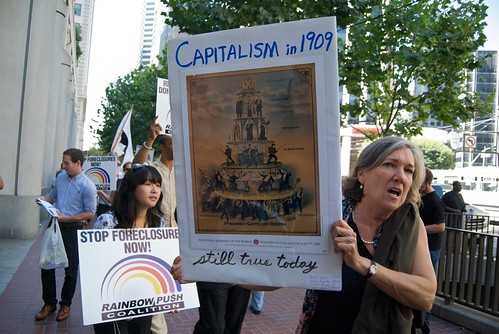
Foreclosure protest at San Francisco Federal Reserve Bank by Steve Rhodes


internet marketing course

Shakesville: Today in Not <b>News</b>: The Afghanistan War Blows

The biggest news about this leak should be that the horror the documents reveal isn't actually news. Not to anyone who's been paying attention to the war we're totally not supposed to be paying attention to. ...

Meet the &#39;roadable aircraft&#39; image - Flying car gets closer to <b>...</b>

View Meet the 'roadable aircraft' image in CNET News' 'Flying car gets closer to takeoff (photos)' slideshow - CNET News.

Small Business <b>News</b>: Getting Things Right | Small Business <b>News</b> <b>...</b>

Marketer Mark Brimm hates when gurus tell entrepreneurs and other marketers they're doing it wrong. Though there are certainly right ways and wrong ways to.


big white booty

Foreclosure protest at San Francisco Federal Reserve Bank by Steve Rhodes


Thursday, July 15, 2010

foreclosure help

Two years into the housing crash, Fannie Mae just now announced a war on strategic defaulters:


WASHINGTON, DC — Fannie Mae (FNM/NYSE) announced today policy changes designed to encourage borrowers to work with their servicers and pursue alternatives to foreclosure. Defaulting borrowers who walk-away and had the capacity to pay or did not complete a workout alternative in good faith will be ineligible for a new Fannie Mae-backed mortgage loan for a period of seven years from the date of foreclosure. Borrowers who have extenuating circumstances may be eligible for new loan in a shorter timeframe.


Fannie Mae will also take legal action to recoup the outstanding mortgage debt from borrowers who strategically default on their loans in jurisdictions that allow for deficiency judgments. In an announcement next month, the company will be instructing its servicers to monitor delinquent loans facing foreclosure and put forth recommendations for cases that warrant the pursuit of deficiency judgments.


Troubled borrowers who work with their servicers, and provide information to help the servicer assess their situation, can be considered for foreclosure alternatives, such as a loan modification, a short sale, or a deed-in-lieu of foreclosure. A borrower with extenuating circumstances who works out one of these options with their servicer could be eligible for a new mortgage loan in three years and in as little as two years depending on the circumstances.


It's an dramatic move for the much-maligned company. But first of all, the plan sounds too vague to result in many prosecutions.


Second, the war on default is a terrible market indicator. Fannie Mae is worried about an increase in strategic defaults, which is caused by and contributes to a fall in prices. Indeed, that's what's been happening all spring, as home values keep dropping in many markets.


Don't miss: 14 Reasons To Fear The Growing Mortgage Bubble


I’ve been around Firedoglake as long as most of you, and I’m happy to be asked to tell you what matters to me about FDL.


What is most striking to me about the FDL of today is the diversity of subject matter: wingnut-filleting, Palin-watching, bassets, Figs & ferrets, Saturday preaching and Sunday contemplation, arts fine and not-so, food from far and near. And that just the nights and weekends! During the business part of every single day, you can tune to Firedoglake for the best coverage of foreclosure fraud, ongoing torture and wiretapping abuses, America’s galloping corporatism, and Republican pandering to the worst of their base.


If there’s a status quo ante that needs puncturing and exposure, you already know Firedoglake writers have a bead on it. You’ve read about it here, or you will soon.


Can you please help FDL raise $60,000 by day’s end so that we can continue to provide you with such a wide range of topics, views, and perspectives untainted by lobbyist money and untrammeled by corporate leash?


There isn’t a better place on the internet for a wider range of topics. If the subject is elite misperception of our deficit problem, you know it’s covered here. If the topic is ignoring the American people’s views on raising taxes on the rich to recoup this century’s losses, it’ll be front-paged at FDL. If the topic you want is our elite non-profit organizations supposedly dedicated to the issue in their mission statement giving this new Democratic president a free pass or even a ringing endorsement, look no further. If you’ve been away from the ‘tubes all day and want to catch up quickly on the stories missed by the Legacy Media, tune in to the News Desk Roundup. If the intersection of politics and the Left Coast glitterati is your game, LaFiga has you covered.


But, for me, what matters most is Firedoglake’s coverage of Lesbian-Gay-Bisexual-Transgender (LGBT) issues, and the effort the blog has undertaken to cover the Prop 8 referendum and the subsequent historic efforts to overturn that civil rights rollback in federal court.


The day after the 2008 election, when jubilant progressives elsewhere prematurely celebrated the election of a young, dynamic Democratic president and LGBT Californians sat stunned and demoralized at our civil rights stripped away, Jane Hamsher sent me an email saying, “We will not rest until this injustice is undone, Teddy.”


This isn’t Firedoglake’s issue: we’re not a ‘gay blog’ and most of us aren’t ‘gay bloggers.’


But amidst my tears on Election Day Plus One, Jane’s email presaged the work FDL has done the last 18 months. FDL is not an LGBT blog nor are we LGBT bloggers, many of us. But the expert team assembled to liveblog from Judge Vaughn Walker’s courtroom — David Dayen, Marcy Wheeler, and Emptywheel’s bmaz — lifted me up. They provided me with the will to continue as my fingers cramped and my back cried out. As I wept in the courtroom while brave plaintiffs described the simple human rights they were daily denied as a gay couple and a lesbian couple, I had the power of FDL with me and behind me.


And you knew where to look for this coverage, because FDL’s tremendous backstage crew had provided a Hub where all our coverage lived — and will always live as long as there’s a federal trial underway on our right to marry.


I knew I could not rest until we’d seen that trial through — and there’s plenty more to come, you know very well, no matter the decision Judge Vaughn Walker renders.


There were plenty of LGBT bloggers covering the trial, twitterers and texters too. But if you wanted the core coverage, the word-for-word explication, the sense of the courtroom, the attitude from the bench, the despair and confusion among the Counsel for Defendant-Intervenors — here’s where you tuned in. The activist organizations and LGBT organizers and bloggers provided plenty of fine background, flavor, color, and perspective.


Firedoglake was the model, though — and for that I am very grateful and thankful. Aren’t you?


Please help Firedoglake raise $60,000 by the end of the day so that we can, among many other things, bring you continued Prop 8 Trial coverage: at the full Ninth Circuit, at the Ninth Circuit Court of Appeals, and — eventually — at the Supreme Court.


I appreciate all the support you’ve provided me, and my co-livebloggers, throughout the trial in San Francisco. Can you please make that support tangible today in a way that will allow us to continue to provide you the coverage you’ve come to expect from us?


Thank you very much!


kamloops


Bungie.net : Bungie Weekly Update: 07.09.10 : 7/9/2010 2:53 PM PDT

Truly Old School. There's this odd – and often misunderstood – rule in the NFL with respect to Quarterbacks. It rarely pops up, because it's not often that an NFL team has their third quarterback (generally referred to as the Emergency ...

AVP console patches &quot;scrapped&quot; <b>News</b> - Page 1 | Eurogamer.net

I really believe that a decent patch would attract and encourage more people to play, even buy it at the reduced price it is now. Of course the worst thing is, this news comes less than a week after the latest map-pack was released. ...

Washington Post acquires iCurrent, a personal <b>news</b> aggregator <b>...</b>

The Washington Post Company has acquired iCurrent, an online tool that allows users to collect news automatically according to their ...


Friday, July 9, 2010

foreclosure listings


From a report emailed to me over the weekend:


At the core of the foreclosure-prevention strategy is ignoring delinquencies. The percentage of older delinquent loans not yet in foreclosure is startling: 60% have at least 12 missed payments, and 35% have at least 18 missed payments. Add to this that three-fourths of delinquent loans are not in foreclosure, and we see that hidden losses well exceed those in the open.


Uh, they're not being "ignored" - this is systemic and intentional fraud.


Remember, these loans are either being held by someone or securitized into some sort of package.  When you have a loan that has no chance of "curing" (to cure a loan with 12 missed payments the borrower would have to come up with the 12 payments to bring it current!) that loan should be carried at its recovery value - that is, the value of the collateral that can be seized and sold, LESS the cost of eviction, remediation and resale.


Does anyone recall all the entries I've written about getting competent legal and accounting (tax) advice before proceeding with any sort of action regarding walking away, short sales or foreclosure?  This same report says:


Many homeowners would be better off going into foreclosure, than doing a short sale. Short sales are fraught with potential legal, credit, and complicated tax issues. For example, someone who refinanced could owe capital gains taxes, which are not forgiven under federal and California temporary debt relief acts. In the foreclosure route, borrowers can live in their house mortgage-free for at least one year, maybe two years. Both short sales and foreclosures are reported as “account not paid in full”, and are equally damaging to a credit score. An exception exists if short sellers can negotiate better terms with their lender on recourse liens. The other possible advantage to a short sale is the ability to get a mortgage again in 2 years (Fannie, Freddie), rather than having to wait 3-5 years after a foreclosure.


Homeowners pursue short sales, unaware of the problems they are creating for themselves. Their agents never warned them of deficiencies, ruined credit, taxes due on forgiven debt, or legal consequences. Agents made flowery promises to get listings, and now the lawsuits are starting.


No, really?  You mean that people in the real estate business are less than truthful with their clients?  That would never, ever happen with licensed professionals, right?


Then there's this, which I also have written about:


Another gray area is junior lien holders asking buyers for additional payments. As the market improved, juniors were no longer content with $3k thrown to them from the senior. They now want 10% of the junior note. They argue the additional payment is legal practice because the payment is made to escrow and appears on the HUD-1. However, they are actually hoping the senior lien holder does not read the HUD-1. The California Association of REALTORS® position is that all payments made by the buyer or agent in the purchase of a short sale must be part of the written short sale agreement signed by the senior lien holder. Concealing payments from seniors is loan fraud, and omitting these payments from the HUD-1 closing statement may violate RESPA. Some seniors reinstate their security interests because of the fraud. It’s surprising that the biggest banks are responding, when pressed on the fraud of their request, “just do it if you want the deal done”.


Right.  Big banks saying "just do it"?  Why would they do that?  Is it so they can re-instate their security interests?  No, nobody would ever do anything that hoses the consumer, would they?  Naw.....


Few people understand that the bank that gave them their mortgage turned around and sold it into a mortgage bond, and the “bank” on their mortgage statement is actually a servicer.


Actually, it's a bit more complicated than that.


As I've been working on (and writing on) for a long time, and as a few attorneys are now starting to understand, the entirety of this process was corrupted and is rife with outright fraud from top to bottom.


Let's go through a (partial) list of the problems:


  • From a report emailed to me over the weekend:


    At the core of the foreclosure-prevention strategy is ignoring delinquencies. The percentage of older delinquent loans not yet in foreclosure is startling: 60% have at least 12 missed payments, and 35% have at least 18 missed payments. Add to this that three-fourths of delinquent loans are not in foreclosure, and we see that hidden losses well exceed those in the open.


    Uh, they're not being "ignored" - this is systemic and intentional fraud.


    Remember, these loans are either being held by someone or securitized into some sort of package.  When you have a loan that has no chance of "curing" (to cure a loan with 12 missed payments the borrower would have to come up with the 12 payments to bring it current!) that loan should be carried at its recovery value - that is, the value of the collateral that can be seized and sold, LESS the cost of eviction, remediation and resale.


    Does anyone recall all the entries I've written about getting competent legal and accounting (tax) advice before proceeding with any sort of action regarding walking away, short sales or foreclosure?  This same report says:


    Many homeowners would be better off going into foreclosure, than doing a short sale. Short sales are fraught with potential legal, credit, and complicated tax issues. For example, someone who refinanced could owe capital gains taxes, which are not forgiven under federal and California temporary debt relief acts. In the foreclosure route, borrowers can live in their house mortgage-free for at least one year, maybe two years. Both short sales and foreclosures are reported as “account not paid in full”, and are equally damaging to a credit score. An exception exists if short sellers can negotiate better terms with their lender on recourse liens. The other possible advantage to a short sale is the ability to get a mortgage again in 2 years (Fannie, Freddie), rather than having to wait 3-5 years after a foreclosure.


    Homeowners pursue short sales, unaware of the problems they are creating for themselves. Their agents never warned them of deficiencies, ruined credit, taxes due on forgiven debt, or legal consequences. Agents made flowery promises to get listings, and now the lawsuits are starting.


    No, really?  You mean that people in the real estate business are less than truthful with their clients?  That would never, ever happen with licensed professionals, right?


    Then there's this, which I also have written about:


    Another gray area is junior lien holders asking buyers for additional payments. As the market improved, juniors were no longer content with $3k thrown to them from the senior. They now want 10% of the junior note. They argue the additional payment is legal practice because the payment is made to escrow and appears on the HUD-1. However, they are actually hoping the senior lien holder does not read the HUD-1. The California Association of REALTORS® position is that all payments made by the buyer or agent in the purchase of a short sale must be part of the written short sale agreement signed by the senior lien holder. Concealing payments from seniors is loan fraud, and omitting these payments from the HUD-1 closing statement may violate RESPA. Some seniors reinstate their security interests because of the fraud. It’s surprising that the biggest banks are responding, when pressed on the fraud of their request, “just do it if you want the deal done”.


    Right.  Big banks saying "just do it"?  Why would they do that?  Is it so they can re-instate their security interests?  No, nobody would ever do anything that hoses the consumer, would they?  Naw.....


    Few people understand that the bank that gave them their mortgage turned around and sold it into a mortgage bond, and the “bank” on their mortgage statement is actually a servicer.


    Actually, it's a bit more complicated than that.


    As I've been working on (and writing on) for a long time, and as a few attorneys are now starting to understand, the entirety of this process was corrupted and is rife with outright fraud from top to bottom.


    Let's go through a (partial) list of the problems:


Friday, July 2, 2010

foreclosure investing


Across the United States, newspaper headlines lead with stories about
financial reform. Members of Congress want to better regulate Wall
Street and to take on the fat cats at the big banks, with their golden
parachutes and big bonuses, who took our hard-earned tax dollars in
the form of a federal bailout, despite the fact that they got us in to
this mess in the first place. And Congress is right to take on the
big banks - reform at the national level is long overdue and obviously
needed. But in the hubbub that is the national overhaul, the seeds of
this reform, the work done at the state and local level, cannot be
overlooked nor can we let up on this work. True reform of our banking
and financial systems will take pressure and action at every level and
across the nation.


Americans are fed up with billionaires who are bilking us for all we
are worth, making the middle class the biggest losers. Our friends
and neighbors have lost their homes, found out that the pensions or
retirement savings they worked for are gone and are struggling to find
work in the worst economy of our lifetimes. In the meantime, Wall
Street is back to business as usual, posting new profits, while those
on the other side of the deals have lost their homes, their jobs, and
their retirement savings.


With all of the anger and distrust of Wall Street, we have hit a place
where we are ready for a basic cultural shift - one that turns away
from looking at our investments and banking solely on the basis of
short-term profits, and toward the production of true long-term
growth: by investing our funds in economic growth opportunities that
directly impact our communities.


We cannot let this historic opportunity pass us by. We must channel
our inner Howard Beale and scream from our windows, "I'm
mad as Hell, and I'm not going to take it anymore" - our outrage must
be heard, not just in words but in action.


At the City level, leveraging this cultural shift means investing our
money in banks that are helping grow Main Street by offering small
business loans, working with homeowners to renegotiate mortgages when
they're faced with foreclosure, and opening up bank branches and the
cycle of credit in under-served areas, by creating local versions of
the Community Reinvestment Act standards. After all, what good does
it do Los Angeles if the banks in which the bulk of our tax dollars
sit in are reinvested in another City, far away?


That's why the Los Angeles City Council unanimously supported my proposal to create Responsible Banking Standards in Los Angeles,
based on a Philadelphia model put in place in 2002. Los Angeles alone
has a cash and pension portfolio of over twenty-five billion dollars,
which allows us to leverage these investments in such a way to benefit
the residents of our city - not just through the rate of return, but
by looking at how the banks and financial institutions reinvest in our
community. The ordinance will require that any bank looking to do
business with Los Angeles would have to submit a report to the City
Treasurer who, in turn, would grade the banks based on their
investments in Los Angeles.


And we're not the only ones - cities including Boston, Carson,
Charlotte, Dallas, Denver, Independence, Muskegon and Watsonville are
all looking into creating similar standards for Responsible Banking.
And this week, Boston City Councilor Felix Arroyo is hosting a
Council hearing to examine how the Boston City Council can hold big
banks accountable in their city. The States of California,
Massachusetts, Minnesota, New Mexico, Ohio and Washington are also all
considering or have implemented sweeping financial reforms, including
looking at the creation of State-run banks or investing only in
State-chartered banks.


The anger is palatable and the time for reform is now.


We've lost our trust in the banks that took our bailout money, and let
hundreds of thousands of homes fall into foreclosure.


We've lost our trust in Wall Street, where companies gained enormous
profits, betting on the demise of investments.


We've lost trust in the rating agencies, when 93% of the
subprime-mortgage-backed securities issued in 2006 for which they gave
AAA ratings are now "junk" status.


The only way that trust is going to be restored is with sweeping
reform. That's why Congress must pass substantive financial reform,
so that Americans can begin to believe again. But at the same time,
reform - just as powerful - must come from the cities and states.
Collectively, our leverage is enormous. I introduced a resolution at
the National League of
Cities in support of local reform, because I know the power we
could have if we banded together. Local and state officials know the
pain of our constituents, and know the benefit that can be derived
from holding banks and financial institutions more accountable.


The notion that we can create real change is not just pie in the sky.
The City of Philadelphia has had their policy in place since 2002, which has resulted in
increased consumer and small business lending to historically
under-served areas of that city. And on April 16, Massachusetts State
Treasurer Timothy Cahill announced that the State of Massachusetts
will begin divesting $243 million in taxpayer dollars from three of
the nation's largest banks - Bank of America, Citibank, and Wells
Fargo. The decision came after the banks were asked, and refused, to
voluntarily comply with an 18% interest rate cap on credit cards and
other consumer borrowing for Massachusetts residents. The cap, which
is required of all Massachusetts state-chartered banks, does not apply
to federally-chartered banks.


These actions are just the beginning of our cultural shift. More
Cities and states are needed to create real pressure on the banks. I
urge every City to create standards for how tax-payer dollars are
invested and find ways to ensure that the dollars are going to banks
and financial institutions that are behaving well.


Shouting may not get what we want - but you can bet that billions and
billions of dollars taken elsewhere will get banks' attention.


We are mad as Hell - and we don't have to take it any more.


About-Face by Rosalyne Shieh and Weatherizing by Catie Newell.


It's no secret that houses can be acquired for cheap in Detroit—as low as $500 if you attend the Wayne County Tax Foreclosure Auction. With property so easy to acquire, a new question surfaces: what should be done with them? Many are dilapidated from disuse, burnt-out with no plumbing or electrical wiring to speak of, despite being located in partially occupied neighborhoods. Prior 'cheap-house' projects have made polemical, visual statements that call out the urban blight in Detroit. Five teaching/research fellows from the University of Michigan's Architecture Department have approached their $500 house a little differently, using it as a testing ground for their ideas about architecture and domestic space.


The house was purchased at the above-mentioned Wayne County Auction, and is located near Hamtramck, in the same neighborhood that community-focused Design99 built their recently blogged Neighborhood Machine. Over the past year, Ellie Abrons, Meredith Miller, Thomas Moran, Catie Newell, and Rosalyne Shieh have been rehabilitating the property, rewiring it for electricity and investing in new windows, for example. At the same time, they've tested their own ideas about new ways to experience and occupy this house, building them right into the existing architecture, reflected in the title of the project: Five Fellows: Full Scale. Now that their fellowships are over and the project is complete, the deed has been turned over to Design99 for further development and use.


penis enlargement patch

Real Estate Vision by mwinvesting